The Round Towers: History and What You'll See
These distinctive towers aren't what most people think. They're not defensive structures or bell towers in the traditional sense. Discover their actual purpose, why they're round, and what architectural details to notice when you visit Monasterboice.

Why They Built Them Round
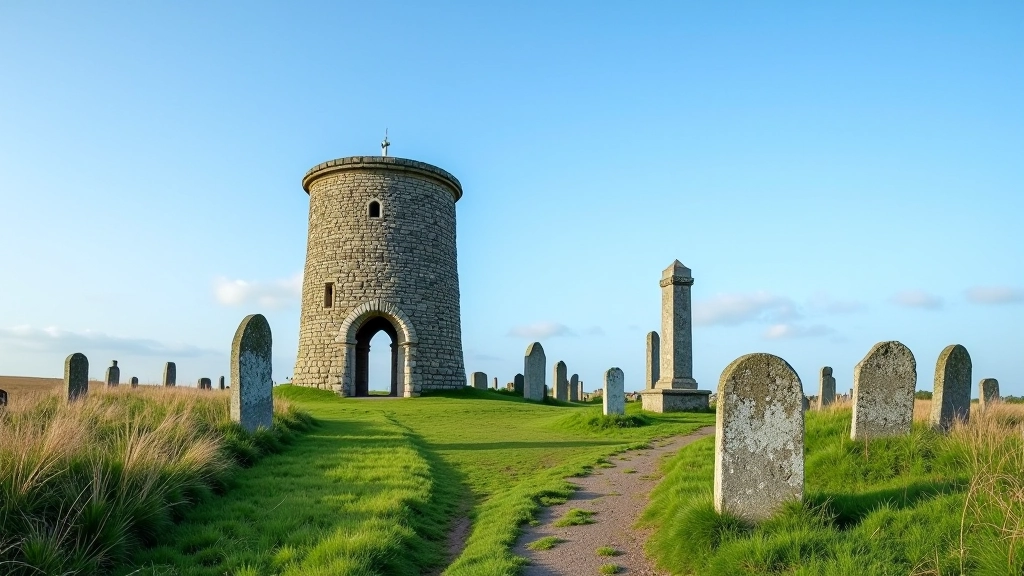
Round towers in Ireland are among the most recognizable medieval structures. Yet many visitors pass them by without understanding what they actually are. They're not watchtowers or military fortifications. They're not bell towers in the way European cathedrals have them.
These towers served as bell towers, yes—but more importantly, they were safe places. When Viking raids came to Ireland in the 8th and 9th centuries, monks needed somewhere to store precious manuscripts, sacred objects, and themselves. A round tower was perfect for that. You could pull up a ladder after everyone was inside. The stone walls were thick. And height gave you warning of approaching danger.
The Basics
- Height: typically 50-110 feet (roughly 15-35 meters)
- Diameter: 15-18 feet at the base (about 5-5.5 meters)
- Built: 9th-12th centuries mostly
- Found: always near monastic sites
- Material: stone with lime mortar
The Distinctive Round Shape
You might wonder why they're round instead of square. A few practical reasons. Roundness is stronger under pressure—there are no weak corners where walls meet at right angles. The shape also means wind hits from all directions equally, so there's no one side taking the brunt of storms. And honestly, it's harder to batter down a round wall with medieval siege tools.
The narrow doorway—usually about 6 to 10 feet above ground—was deliberate. It meant you had to use a removable ladder or wooden stairs. Once the community was safe inside, those stairs came up after them. No ground-level entry meant no battering ram would work. The small windows higher up let in light and air without compromising safety.
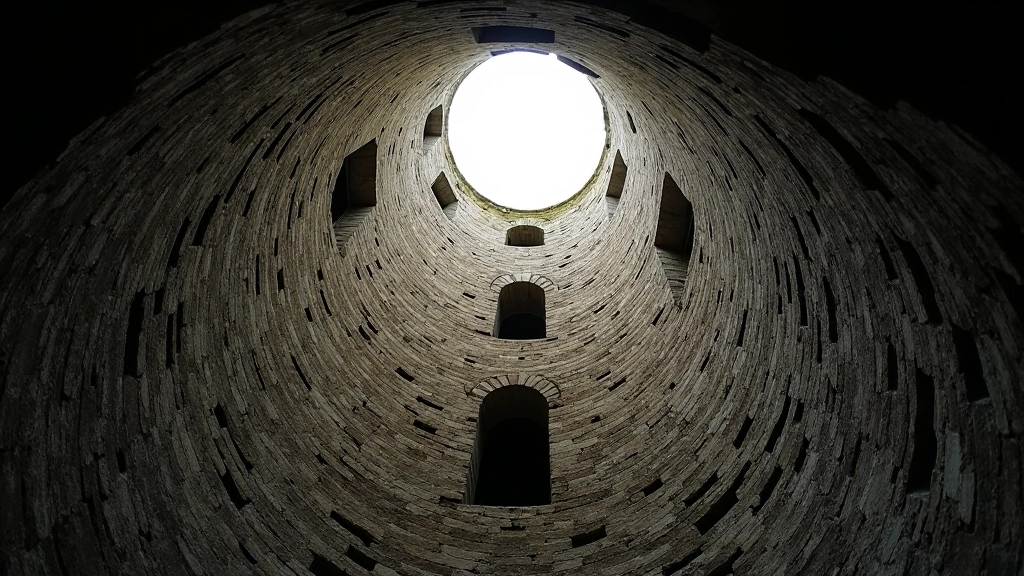
Inside, you'll find a series of wooden floors (though those are long gone now). These created different levels for storing valuables, sleeping, and keeping records. The very top was open to the bell, which hung in a framework. Monks would climb the internal stairs and ring it to call communities to prayer or—in danger—to alert neighbors of trouble.
What to Notice When You Visit
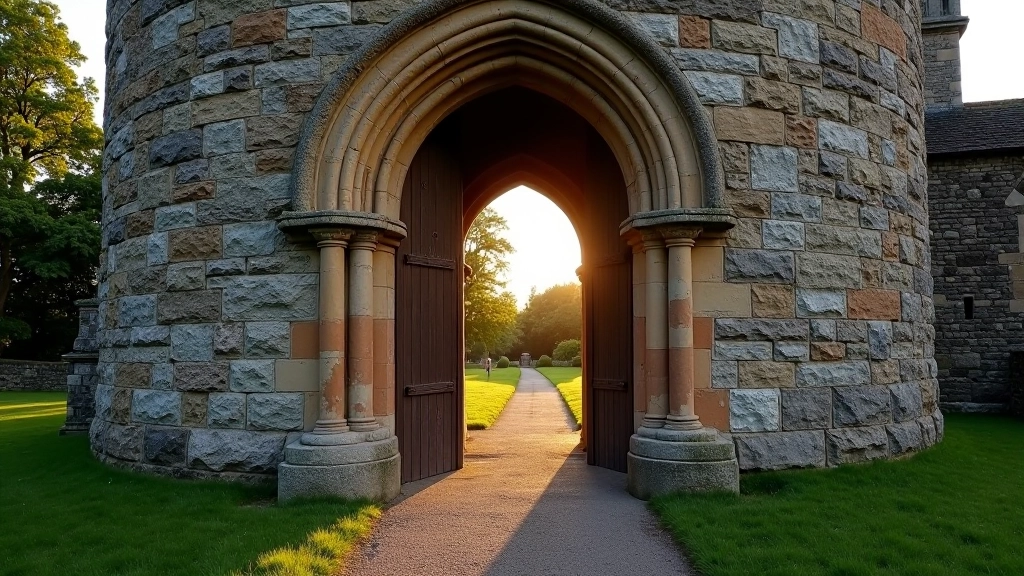
When you're standing in front of a round tower at Monasterboice, here's what to look for. First, check the doorway height and position. Most are offset, not centered—this was intentional design. The weathering pattern on the stones tells you about age and weather exposure. Stone on the north side usually shows more lichen and moss growth because it gets less sun.
Look at the stonework itself. You'll see a mix of stone sizes—larger blocks lower down for stability, smaller stones higher up. The mortar between stones varies in color and texture. Where repairs were made, you can often spot newer mortar (lighter color, smoother joints) versus original medieval work (darker, rougher). Don't miss the carved details either. Sometimes you'll see crosses or marks on individual stones.
If there's a cone-shaped roof still standing, that's a later addition—most medieval towers didn't have permanent roofs. The cone shape lets rain run off quickly. Some towers have lost their upper portions entirely. This doesn't mean they're less interesting—it just means you can see more of the internal structure.
Historical Context: Life at Monasterboice
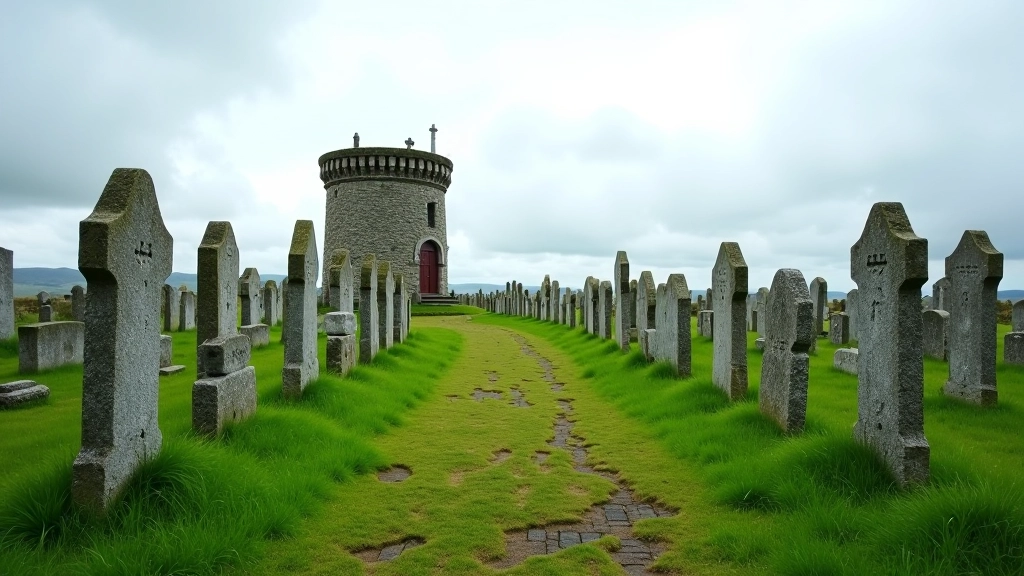
Monasterboice was founded in the 6th century by Saint Buite. By the time the round tower was built (likely 10th century), it was already an established center of learning and Christian worship. The monastery held valuable manuscripts—hand-copied books that took monks months or years to complete. These weren't just religious texts either. Monasteries were where knowledge was preserved: books on medicine, agriculture, law, and history.
The tower's construction reflected a real need. Viking raids on Irish monasteries were frequent and devastating. Monasteries were targets because they held wealth in the form of gold objects, silver altar pieces, and illuminated manuscripts. A community of monks with portable valuables was an attractive target. The round tower offered protection. It's estimated that Ireland had between 80 and 120 round towers built between the 9th and 13th centuries. Many were destroyed or damaged. Others stand remarkably intact after a thousand years.
About This Information
This article is educational and informational in nature. While we've drawn on archaeological evidence and historical scholarship, interpretations of medieval structures continue to evolve as new research emerges. The details about round towers—their construction, purpose, and usage—reflect current scholarly consensus but aren't absolute facts set in stone. Different historians may emphasize different aspects of these structures' roles in monastic communities. If you're planning to visit Monasterboice, check local visitor information for current accessibility details and any site-specific guidelines.
What Makes Them Special
A round tower isn't just a pretty medieval structure to photograph. It's a physical reminder of a real historical challenge—monks protecting their knowledge and community from danger. When you stand at the base and look up at those weathered stones, you're looking at a solution that worked for centuries. The tower at Monasterboice has survived a thousand years. It's survived countless storms, religious upheaval, wars, and changing times.
Next time you visit, take a few minutes to really observe it. Walk around it completely. Notice the doorway. Look at the stonework. Imagine monks climbing those internal stairs to ring the bell. Think about what it meant to have a place of refuge when the outside world felt dangerous. That's what these towers are—physical history, standing quietly in Irish churchyards, waiting for people curious enough to actually look and understand.
Related Articles